How to Read a Perfume Review Without Borrowing Someone Else’s Taste
Look for testing detail and useful comparisons. A high score cannot tell you whether you will enjoy wearing a fragrance.
One reviewer calls a perfume cozy. Another says it is heavy. They might be noticing the same sweet, warm character and responding to it differently. A review becomes useful when you can separate the observation from the verdict.
You do not have to agree with a reviewer for their description to help you choose.
Look for the test behind the opinion
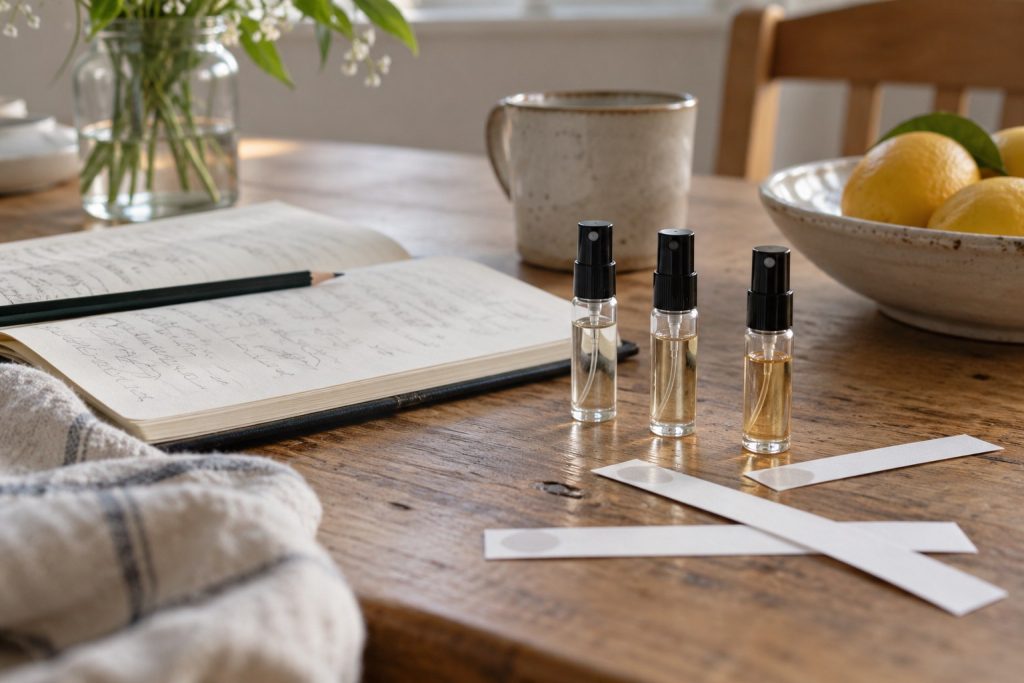
Was the fragrance worn on skin, sampled on paper or described from the brand’s materials? Does the reviewer explain the setting and the part of the day they are discussing? A quick first impression is still useful when it is identified as one.
Be more cautious when a review gives precise performance claims without explaining how they were reached. Different application amounts and conditions can make those numbers difficult to compare.
Translate the adjectives into your preferences
“Very sweet” is helpful if you know your own response to sweetness. “Sophisticated” is harder to use because it may describe an association rather than a smell. Look for words tied to something you can imagine: dry, sharp, powdery, smoky, soft or dense.
Then ask whether that sounds comfortable to you. You are shopping for a fragrance, not trying to earn the same score as the reviewer.
Use comparisons you already understand
A comparison with something you have smelled can be more informative than a paragraph of unfamiliar note names. Even then, check whether the writer means the opening, the overall character or the later scent.
“Like this, but less sweet” gives you a direction to test. It does not establish that two fragrances are interchangeable.
Keep praise and evidence separate
Compliment stories, dramatic rankings and “everyone needs this” claims can be entertaining. They are weaker evidence of how the perfume will fit your routine. Disclosure of a gifted product or commercial relationship also helps you understand the context.
After reading a few reviews, write one reason to sample and one possible concern. If neither is clear, you probably need a better description rather than more ratings. The final test is whether you like wearing it, including the quiet parts of the day that a review cannot live for you.
Illustration generated with AI; the bottles shown are generic.